


Ukrainian and Russian Bride dating advices - CQMI blog

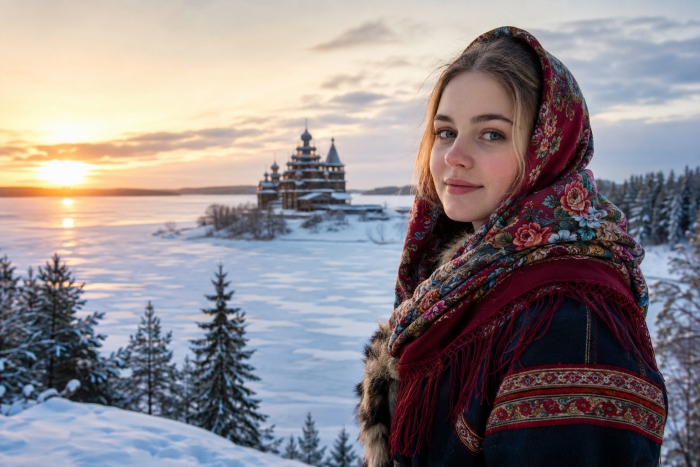 Karelian Women
Agence CQMI
Karelian Women
Agence CQMI
Karelian Women of the Republic of Karelia: 9 Myths Debunked
In brief: A Karelian woman is not simply a Finnish woman who happens to hold a Russian passport, nor is she just another Russian woman under an exotic regional label. She is the heir of a Baltic-Finnic people, today a minority even within her own Republic — Karelians make up only about 7.4% of the population of Karelia, the rest being predominantly Russian. It was from her villages, between Lake Onega and the Finnish border, that the runic songs emerged which gave birth to the Kalevala, Finland's national epic. If you are not serious — if you are looking for a one-night stand — please do not apply. These women are looking for one thing only: marriage and a lifelong union.
Article by Antoine Monnier, director and co-founder of CQMI, an international matchmaking agency specializing in serious relationships between Western men and women from Russia, Eastern Europe, the Caucasus, and Central Asia since 2014.
The border people that Finland and Russia fought over for eight centuries
In more than ten years running CQMI, one question comes up almost every time I introduce a new nationality to our members: "Antoine, how is she different from other Russian women?" For Karelia, the answer lies in a single image. Robert, our client from Edinburgh, once showed me a map of the region and said: "It looks like Finland and Russia split the same people in half." He was right. West of Lake Onega, right on the Finnish border, lies the Republic of Karelia, a Russian territory of roughly 528,000 inhabitants, whose capital, Petrozavodsk, was founded in 1703 by Peter the Great to house a cannon foundry for his war against Sweden. Karelians speak a Finno-Ugric language extremely close to Finnish, and their villages supplied most of the raw material for the Kalevala, the 19th-century epic that shaped Finland's national identity. To place this nationality within the broader Slavic and Finno-Ugric picture we usually present to our members, our reference page on Russian women remains the best starting point before exploring a republic as unique as Karelia.
What ten years of matchmaking have taught me is that the men who succeed with a woman from such a little-known nationality are the ones willing to learn before trying to seduce. That is the purpose of this article.
Short answer: a Karelian woman is a Russian citizen of Finno-Ugric origin, whose language and part of her oral heritage are directly related to Finnish. Unlike Karelians in Finland, who are Lutheran, Karelian women in Russia are Orthodox, a legacy of Christianization in the 13th century. She lives in a region covered roughly half by forests and tens of thousands of lakes, where the tradition of runic singing and ritual lament, historically carried by women, holds a central cultural place. She is not looking for a passing adventure, but for a stable man who respects her roots and is capable of patience.
Myth #1 — "A Karelian woman is basically a Russified Finnish woman"
This is the most common mistake, and it deserves precise correction. Russian Karelians and Finnish Karelians do share a common origin: they are the same Baltic-Finnic peoples, separated by centuries of wars between Sweden and the Republic of Novgorod, and later between Sweden and the Russian Empire. But the territorial split, sealed notably by the Treaty of Nystad in 1721, produced two distinct cultural trajectories. In Finland, Karelians became Lutheran and gradually merged into Finnish national identity. In Russia, they were Christianized as early as 1227 under Prince Yaroslav II of Vladimir and remained Orthodox. A Karelian woman from the Republic of Karelia is therefore not an expatriate Finn: she is a full Russian citizen, with a history, religion, and everyday life entirely different from those of her Finnish cousins.
Verdict: FALSE. Karelian women in Russia belong to a historical and religious trajectory distinct from their Finnish cousins, separated by nearly three centuries of state borders.
Myth #2 — "Karelian is just a dialect of Finnish, not a real language"
This is a genuine linguistic debate, and it deserves nuance rather than a flat answer. Some Finnish linguists do consider Karelian a set of dialects of Eastern Finnish. Other researchers, particularly Russian ones, treat it as a distinct language with its own literary standards. What is certain is that Karelian and Finnish share a common ancestor, Proto-Karelian, spoken around Lake Ladoga during the Iron Age. Today, the language is fragile: it is spoken by roughly 25,000 people in total, and only a small share of Karelian children still learn it. One telling fact: the Republic of Karelia is the only republic within the Russian Federation where none of the indigenous peoples of the territory has its own language recognized as an official national language, alongside Russian.
Verdict: NUANCED. The status of Karelian is debated among linguists, but it is unquestionably a fragile, minority linguistic system, today genuinely at risk of disappearing.
Myth #3 — "Karelian women are the majority in their own Republic"
This is false, and it is one of the most striking paradoxes of this nationality. Unlike republics such as Tatarstan or Chechnya, where the titular people remain demographically dominant, ethnic Karelians today make up only about 7.4% of the population of their own Republic, which is overwhelmingly Russian or Russified, settled in several waves, notably after the Second World War. A woman who identifies as Karelian in this context is therefore not simply someone born in a region that carries that name: she is claiming a minority identity, consciously and often proudly, within a territory where she is no longer statistically at home.
Verdict: FALSE. Ethnic Karelians are a demographic minority in their own Republic, which makes Karelian identity all the more deliberate among those who claim it.
Myth #4 — "The Kalevala is just a Finnish book, it has nothing to do with Karelian women"
This is a very common misunderstanding, and it misses the essential point. The Kalevala, Finland's national epic published by folklorist Elias Lönnrot in 1835 and again in 1849, was not invented in an office in Helsinki. It was assembled from thousands of verses collected directly in the villages of Northern and Eastern Karelia, from traditional singers called runoja. Traditional runic singing, performed a cappella in trochaic tetrameter, was often practiced in pairs: two singers would hold each other by the wrists and answer one another in alternating stanzas. But there is an even more intimate tradition, almost exclusively female: the itkuvirsi, the ritual lament, improvised and performed at funerals, departures, or weddings, with sobbing inflections and poetic formulas passed down from mother to daughter. This oral heritage, now studied as a European cultural treasure, owes much of its survival to the Karelian women who carried it across generations.
Verdict: FALSE. The Kalevala's source material comes directly from Karelian villages, and the lament tradition in particular has historically been carried and transmitted by women.
Myth #5 — "She lives isolated in the taiga, cut off from modern life"
I understand where this image comes from — the region has roughly 61,000 lakes and 27,000 rivers, and half of the territory is covered in forest — but it is misleading for most of the women we introduce. The capital, Petrozavodsk, is a modern city of roughly 280,000 people, built on the shore of Lake Onega, the second-largest lake in Europe. It is home to two universities, including Petrozavodsk State University, founded in 1940, with around 15,000 students, as well as a music conservatory affiliated with the one in Saint Petersburg. Petrozavodsk was also long the main Finnish hub of the Soviet Union, with up to 15,000 residents of Finnish origin by the end of the Soviet era, which still gives the city a distinctly European character and a real cultural closeness to neighboring Finland. A contemporary Karelian woman therefore splits her time between urban life, university or employment, and a genuine emotional bond with the forests and lakes of her home region.
Verdict: NUANCED. The natural setting is real, but the everyday life of a Karelian woman today is largely urban, studious, or professional, in a regional capital firmly oriented toward Europe.
Myth #6 — "Karelian culture is dead folklore trotted out for tourists"
This is false, and Kizhi Island is the best proof. This UNESCO World Heritage Site, an hour and a half by boat from Petrozavodsk across Lake Onega, is home to the Church of the Transfiguration, a masterpiece of wooden architecture built in 1714 which, according to local legend, required not a single nail for its main structure. But Kizhi is not merely a frozen museum: Petrozavodsk itself maintains a cinema named Kalevala, a national theater dedicated to Karelian culture, and university programs devoted to the Karelian language and its oral traditions. Along the shores of Lake Onega, one can also find Neolithic petroglyphs thousands of years old, carved by the region's very first inhabitants. Far from being tourist-shelf folklore, Karelian identity continues to express itself through architecture, traditional music, and higher education.
Verdict: FALSE. Karelian culture is expressed today through UNESCO-listed architectural heritage, active cultural institutions, and university-level teaching, not just through reenactments staged for tourists.
Myth #7 — "A Karelian woman thinks and behaves exactly like a woman from Moscow or Saint Petersburg"
This is an oversimplification, and it deserves a nuanced explanation. A Karelian woman is, administratively and culturally, fully Russian: she speaks Russian daily, is very often Orthodox, and shares with women from Moscow or Saint Petersburg the same attachment to family values that I regularly describe in my articles on Russian women. But her regional history — the immediate proximity to Finland, the Finno-Ugric heritage, the memory of the 20th-century Russo-Finnish wars that deeply marked the region — gives her a particular sensitivity to the border, to Northern Europe, and to a lifestyle closer to nature than that of a large Russian metropolis. Many of our members from Karelia also have family or regular contacts across the Finnish border.
Verdict: NUANCED. A Karelian woman shares the common Russian cultural foundation, but with a regional sensitivity and a closeness to Northern Europe that set her apart from a woman from Russia's major metropolises.
Myth #8 — "Karelian, Vepsian, Sami — they're all the same Far North peoples"
This is a common confusion among Westerners discovering this region, and it deserves precise correction. The Vepsians are another Finno-Ugric people, present in small numbers in the Republic of Karelia, but linguistically closer to the Lude dialect of Karelian than to standard Finnish, with a population today reduced to a few thousand people. The Sami, on the other hand, are not from this region at all: they are a nomadic people of the far northern Scandinavian Arctic, traditionally reindeer herders, whose culture, language, and way of life have little in common with those of Karelian women. Confusing these three peoples is a bit like confusing a Breton, a Basque, and a Laplander just because they all live in Western Europe.
Verdict: OVERSIMPLIFIED. Karelians, Vepsians, and Sami are neighboring peoples of the European Far North, but linguistically and culturally distinct. Lumping them together ignores what truly defines each identity.
Myth #9 — "She will never adapt to life in Canada, the UK, Australia, or the US"
I will answer honestly, without downplaying the real cultural differences. They exist, and it would be dishonest to pretend otherwise. The harsh climate, and the strong bond to nature and long cold seasons, shape a patient and enduring mindset, sometimes more reserved at first than that of a woman from southern Russia. What ten years of matchmaking at CQMI have shown me is that couples who fail almost never stumble over cultural difference as such. They stumble over the man's lack of curiosity, his inability to genuinely take an interest in what matters to her. A man who takes the time to learn, even briefly, about Karelia's history, about the Kalevala, or about the region's proximity to Finland, sends a signal of seriousness that immediately changes the nature of the relationship.
Verdict: NUANCED. Cultural differences are real and deserve respect, but they are only an obstacle for a man who refuses to take an interest in them.
Karelian woman, Finnish woman, Russian woman: the real differences
| Criteria | Karelian woman (Russia) | Finnish woman | Russian woman (European Russia) |
|---|---|---|---|
| Heritage | Baltic-Finnic, Finnic branch | Baltic-Finnic, same Finnic branch | East Slavic |
| Religion | Orthodox (since 1227) | Predominantly Lutheran | Orthodox |
| Native language | Russian (Karelian declining, ~10% speak it) | Finnish | Russian |
| Citizenship and papers | Russian (Russian visa/procedures) | European Union (Schengen) | Russian |
| Core value | Endurance, closeness to nature, patience | Independence, discretion, punctuality | Family warmth, practicality |
| Cultural heritage | Kalevala, runic singing, itkuvirsi | Kalevala, sauna, Nordic design | Varies by region |
| Temperament | Reserved, enduring, warm once trust is built | Reserved, individualistic, direct | Warm, direct over time |
| Meeting logistics | Petrozavodsk: flights via Moscow or Saint Petersburg | Direct flights to Helsinki from most of Europe | Varies by city |
5 mistakes men make with Karelian women
Read carefully before your first contact.
- Mistaking her for a pure Finnish woman. She is a Russian citizen, Orthodox, and her administrative path has nothing to do with that of an EU national. Doing your homework avoids misunderstandings from the very first exchanges.
- Assuming the whole population of Karelia speaks Karelian. Only a small minority does. Addressing her assuming fluency in this language can create unnecessary awkwardness.
- Underestimating the richness of her oral heritage. The Kalevala and the lament tradition are not minor folkloric curiosities: they are a genuine source of regional pride. Taking a sincere interest is always appreciated.
- Going through unverified platforms. This nationality, still little known to serious agencies, is a prime target for fake profiles. Our article on Pay Per Letter (PPL) dating scams will give you the keys to spot the real from the fabricated.
- Handling the Russo-Finnish history clumsily. The 20th-century wars between Russia and Finland deeply marked this border region. It is not a topic to avoid, but one to approach with tact, never with blunt judgments.
Two field stories
James's frozen lake. James, our client from Toronto, had scheduled his first video call with a member from Petrozavodsk in the middle of January. Through the window behind her, he saw an endless white expanse. "Antoine, is that the sea?" he asked me, worried he had misread the geography. It was Lake Onega, entirely frozen over. He laughed about his mistake directly with her on the call, and that spontaneous moment relaxed the entire conversation. They are now planning their first trip to Petrozavodsk — this time in the middle of summer.
Robert's Kalevala. Robert, our client from Edinburgh, had bought an English translation of the Kalevala out of curiosity before his first exchange with a Karelian member. During their second call, he clumsily brought up one of the tales he hadn't fully understood. She burst out laughing, then spent twenty minutes retelling the story in her own words, visibly touched that a Western man had made the effort. "No one had ever asked me about that before," she told him afterward. They have now been a couple for several months.
Frequently asked questions about Karelian women
Do I need to speak Karelian or Finnish to have a serious relationship with a Karelian woman?
No, this is absolutely not a requirement. Russian remains the everyday language of communication for the vast majority of Karelian women, even among themselves. CQMI has translation assistants on site to make exchanges easier. Showing genuine interest in Karelian or Finnish, even through a few learned words, remains a sign of respect that is always appreciated.
How can I meet a Karelian woman from Canada, the UK, Australia, or the US?
The safest route remains a serious matchmaking agency that verifies civil status, documents, and the motivations of each member before any introduction. Petrozavodsk is generally reached via a flight through Moscow or Saint Petersburg. We recommend that the first trip be made in person to maximize the chances of building a lasting relationship.
Is a Karelian woman culturally close to a Finnish woman?
She shares a common linguistic and ethnic origin with Finnish women, but her life path is entirely Russian: citizenship, Orthodox religion, and the Russian school and administrative system. Cultural closeness to Finland does exist, especially in Petrozavodsk, but it should not obscure the fact that she is, first and foremost, a Russian woman in her own right.
What age difference is acceptable with a Karelian woman?
The same benchmarks apply as for our Russian members generally: a gap of 2 to 10 years is the optimal success zone, with a reasonable maximum of 15 years depending on the profiles involved. Beyond that, the question of financial support arises differently, as we explain in detail in our dedicated article on the subject.
Is Karelia's harsh climate an obstacle to a lasting relationship?
No, but it shapes a patient and enduring temperament that should be appreciated rather than feared. Most of our members from this region adapt very well to life in Canada, the UK, Australia, or the US, where the climate, while not identical, is generally milder than that of their home region.
What you really need to understand about Karelian women
A Karelian woman is not a geographical curiosity to add to a list of exotic nationalities of the Russian Federation. She is the heir of a border people, torn for centuries between Sweden, Novgorod, and later Russia, who ultimately gave Northern Europe one of its greatest literary works without even receiving full recognition for it. What the experience of the international matchmaking agency CQMI confirms, after more than 350 successful marriages since 2014:
- Her initial reserve is not coldness — it is a Nordic modesty that must be earned, and which then gives way to unwavering loyalty.
- Her Karelian identity, a minority even in her own Republic, is not an administrative detail — it is a claimed pride that deserves to be respected and understood.
- Her cultural closeness to Finland is not an extra difficulty. It is what makes the relationship profoundly different from anything you have known before.
If you are a serious man — in Canada, the UK, Australia, or the US — who wants to build a real life together with a woman from Russia, our page dedicated to Russian women presents our full range of verified members, some of whom come from the European Far North.
Ready to meet a serious woman from Russia?
CQMI has been operating since 2014. Our formula — $350 CAD/month — gives you access to 10 verified contacts with women genuinely motivated to build a lasting relationship. More than 40% of female applications are rejected during our screening.
350+ successful marriages · Divorce rate < 7% · 1,750 verified members · No chatbots, no ghost translators
Questions? Write directly to Antoine: This email address is being protected from spambots. You need JavaScript enabled to view it.
Curious whether you'd have a chance with a Russian woman? Try our compatibility quiz.
Further reading
Latest from Antoine Monnier
- Marriage in the West and the East: Why One Institution Is Fading While the Other Holds
- Raising Kids: Canada, the US, Russia, and Ukraine Do It Differently
- Divorce in Russia, Ukraine, Canada and the US: What the Sociology Shows
- Ukrainian Woman Asks You for Money: Scam or Sincere?
- Ukrainian Refugee Women: Why Their Host Country Changes Everything

 +1 514 794-5053