


Ukrainian and Russian Bride dating advices - CQMI blog

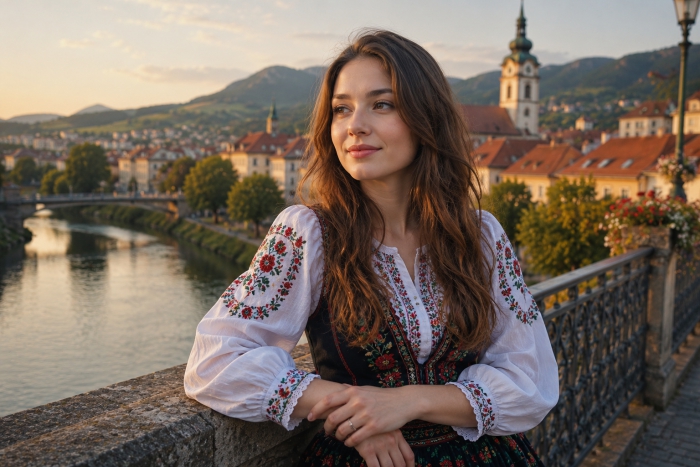 Hungarian Women of Transcarpathia
Agence CQMI
Hungarian Women of Transcarpathia
Agence CQMI
Hungarian Women of Transcarpathia: 9 Myths About This Ukrainian Minority
In short: a Hungarian woman from Transcarpathia is neither a Budapest native who happens to live in Ukraine, nor an ordinary Ukrainian woman who simply speaks a bit of Hungarian at home. She belongs to a national minority of roughly 130,000 people, rooted for over a thousand years in western Ukraine, whose language, religion and history have nothing Slavic about them. Passed between Hungary, Czechoslovakia, the USSR and independent Ukraine within a single century, and marked by a mass deportation in 1944-1945 that remains little known in the West, this community is now living through another ordeal because of the war. Like the vast majority of Ukrainian women we work with, a Hungarian woman from Transcarpathia is not looking for a fling — she is looking for marriage and a real life project.
A Hungarian people that never lived in modern-day Hungary
A few months ago, one of our members, Robert, based in Edinburgh, wrote to me after exchanging messages with a woman from Uzhhorod: "Antoine, she told me she's Hungarian, but her passport is Ukrainian and she's lived in Ukraine her whole life. I'll admit I'm confused." What fifteen years in this business, alongside Boryslava, have taught me is that this confusion is the rule rather than the exception among our Western clients: we tend to imagine national identity as a single block matching a country's borders, when Central and Eastern Europe has functioned for centuries on an entirely different logic — that of national minorities rooted far from their "mother country."
A Hungarian woman from Transcarpathia is exactly this case. She holds Ukrainian citizenship, was born and raised in Ukraine, but her ethnicity, mother tongue, and often her religion are Hungarian — a people settled in this region since the late 9th century, long before the very notion of "Ukraine" existed. This article looks at one of the lesser-known branches of our Hungarian women profiles: those from Transcarpathia, the border region of western Ukraine where nearly the entire Hungarian minority of the country lives.
Short answer: A Hungarian woman from Transcarpathia is a Ukrainian citizen of ethnic Hungarian origin, whose mother tongue belongs to the Uralic language family, with no connection whatsoever to Slavic languages. Her home region, Transcarpathia, belonged to the Kingdom of Hungary, then to Czechoslovakia, before being annexed by the USSR in 1945 and becoming part of independent Ukraine in 1991 — a century marked by the deportation of thousands of Hungarian men to Soviet labour camps in 1944-1945. Like most Ukrainian women, she is looking for a serious marriage and a real shared future, not a passing affair.
Did you know? The town of Berehove (Beregszász in Hungarian), just seven kilometres from the border with Hungary, is the only town in Ukraine where the population of Hungarian origin remains the majority. It is home to a fully Hungarian-language institution of higher education, the Ferenc Rákóczi II Transcarpathian Hungarian College, as well as a respected wine-growing region whose vineyards border the famous Tokaj appellation just across the frontier.
Myth 1 — "A Hungarian woman from Transcarpathia is basically a Hungarian from Budapest"
This is an understandable mix-up, but an inaccurate one. In the vast majority of cases, a Hungarian woman from Transcarpathia has never lived in Hungary as a country: she was born, raised and educated in Ukraine, in a family settled on this territory for generations, sometimes for centuries. What we often observe at CQMI is that these women first and foremost describe themselves as "Transcarpathian Hungarians" or "Hungarians of Ukraine" — a distinct regional identity, different from that of a Budapest native, with its own accent, its own local traditions, and a very particular relationship to a dual national belonging.
Verdict: FALSE. She is Hungarian by language, ethnicity, and often religion, but Ukrainian by citizenship, birth, and her entire life path.
Myth 2 — "Hungarian and Ukrainian are close Slavic languages, like Russian and Ukrainian"
This is a common linguistic mistake worth correcting precisely. Ukrainian, like Russian, belongs to the Slavic language family. Hungarian belongs to a completely different family — the Uralic family (Ugric branch) — whose closest living relatives are Finnish and Estonian, spoken over 1,500 kilometres away from Transcarpathia. Unlike a French speaker learning Italian or Spanish, a Ukrainian speaker cannot understand a single word of Hungarian, and vice versa. It is precisely this total language barrier that explains how the Hungarian minority has managed to keep such a distinct identity for over a thousand years, despite every change of border.
Verdict: FALSE. Hungarian has no kinship with Slavic languages at all; it is a Uralic language, as distant from Ukrainian as Finnish is from French.
Myth 3 — "Transcarpathia has always been part of Ukraine"
This is historically false, and the region is in fact one of the European territories that changed hands most often in the 20th century. It belonged to the Kingdom of Hungary for nearly a thousand years, until the First World War. The 1920 Treaty of Trianon detached it from Hungary and folded it into the newly-formed Czechoslovakia, under the name Subcarpathian Rus. In November 1938, the First Vienna Award returned the southern strip of the territory, including Berehove and Uzhhorod, to Hungary; in March 1939, Hungary occupied the whole region after a brief and short-lived declaration of independence by "Carpatho-Ukraine." It was only in autumn 1944, as the Red Army advanced, followed by a treaty signed between the USSR and Czechoslovakia in June 1945, that the region was annexed to Soviet Ukraine — and therefore, since 1991, to independent Ukraine.
Verdict: FALSE. In little more than twenty-five years (1920-1945), this region changed sovereignty four times. Its current status as part of Ukraine only dates back to 1945.
Myth 4 — "The 1944 deportations only happened to Crimean Tatars, not to Hungarians"
This underestimates a tragedy still far too little known outside the region. In November 1944, as the Red Army entered Transcarpathia, Soviet authorities summoned more than ten thousand Hungarian and German civilian men aged 18 to 50, under the pretext of "three days of reconstruction work." Gathered at the Svaliava (Szolyva) transit camp, they were then deported to Gulag camps in Siberia and the Urals for years of forced labour — an episode Hungarian historians call "malenki robot" (from the Soviet expression used to deceive those rounded up, roughly meaning "a little work"). A significant share of these men never returned; others were only repatriated years later. What we observe among our Transcarpathian members, together with Boryslava, echoes what we had already noted with our Crimean Tatar members: the memory of this deportation remains vivid through family stories, passed down from grandmother to granddaughter, for a long time unable to be spoken about openly under Soviet rule.
Verdict: FALSE. The 1944-1945 "malenki robot" deportation struck the Hungarian community of Transcarpathia head-on, with a very heavy human toll still commemorated today.
Myth 5 — "She definitely has a Hungarian passport and doesn't feel Ukrainian at all"
This is an overgeneralization that needs serious nuance. Since 2010, Hungary has offered a simplified naturalization process to people of Hungarian origin living outside its borders, and a significant share of Transcarpathia's population has indeed obtained dual Hungarian-Ukrainian citizenship over the years. But holding a Hungarian passport does not mean rejecting one's Ukrainian belonging: most of our members from the region describe themselves as deeply attached to both identities at once — a dual belonging that, paradoxically, has been reinforced by the war since 2022, as many families have lived through a very real attachment to their Ukrainian homeland alongside their Hungarian culture.
Verdict: NUANCED. Dual citizenship is common, but it reflects a lived dual belonging, not a rejection of Ukrainian identity.
Myth 6 — "Ukraine's language laws are just an administrative detail that doesn't affect her"
This underestimates a subject that touches the daily lives of our members directly. In 2017 and again in 2019, Ukraine adopted education and language laws strengthening the mandatory use of Ukrainian, including in schools, which reduced the hours of Hungarian-language instruction in the region's schools and triggered serious diplomatic tension with Budapest — to the point that Hungary long slowed down certain steps of Ukraine's European and Atlantic integration process over this very issue. We don't do politics at CQMI, but it would be dishonest to claim this has no bearing on our members: many grew up with Hungarian as the language of home and school, and experience these changes as real pressure on their cultural identity, while remaining, for the vast majority, loyal to their country, Ukraine.
Verdict: FALSE. This is a subject closely followed by the Hungarian community of Transcarpathia, with concrete consequences on education and local cultural life.
Myth 7 — "Because of the war, it's now impossible to meet a woman from this region"
This is inaccurate, even though the human and logistical situation there has been particular since February 2022. Transcarpathia, bordering Hungary, Slovakia, Poland and Romania, has become a transit and refuge zone for many Ukrainian families from other regions, while some of its own residents, men of mobilization age chief among them, have sought refuge across the border in Hungary. Some have attempted to cross the Tisza River illegally, which marks part of the border, sometimes with tragic consequences regularly reported by regional press. But the female population itself remains very much present locally, in Uzhhorod, Mukachevo or Berehove, or reachable through the sizeable diaspora now settled in neighbouring Hungary. Our network of members covers all of these situations.
Verdict: FALSE. Meeting someone remains entirely possible; it is the situation of men from the region, not women, that has been most affected by the war.
Myth 8 — "Muslim, Orthodox, it doesn't matter — all Eastern European women share the same religion"
This is a common religious mix-up worth correcting. Unlike the Orthodox Ukrainian majority, the Hungarian minority of Transcarpathia is overwhelmingly Reformed (Calvinist) Protestant, with a Roman Catholic minority — two Western Christian denominations inherited from the 16th-century Reformation, which deeply shaped the historical Kingdom of Hungary. What we observe among our members from the region: this religious belonging, often understated in daily life, strongly shapes the major moments of family life — weddings, christenings, end-of-year celebrations — and is passed down as a strong marker of identity, on par with language itself.
Verdict: FALSE. The Hungarian community of Transcarpathia is predominantly Reformed (Calvinist), a Western Christian denomination with no ties to the surrounding Slavic Orthodoxy.
Myth 9 — "This is too niche and regional a subject, no point learning about it to win her over"
I answer this myth with the same conviction as for every nationality featured on this blog: learning about a woman's real history is never a waste of time — it is the very foundation of the respect that a serious relationship requires. What ten years of matchmaking, together with Boryslava, have taught us: the couples who last aren't the ones where the man has mastered every detail of his partner's history, but the ones where he showed, from the very first exchanges, genuine curiosity and a real effort to understand.
Verdict: FALSE. Learning about this history is not a superfluous detail — it is a sign of seriousness immediately noticed by a woman used to having to explain everything from scratch.
What we often observe among our Transcarpathian Hungarian members
From our experience, after more than ten years running CQMI, we find that a Hungarian woman from Transcarpathia approaches a relationship with a striking blend of identity pride and pragmatism forged by a century of territorial instability. We often observe that these women, used since childhood to living between two languages, two calendars, and sometimes two passports, develop remarkable adaptability — a real asset for a Western man considering a binational relationship. The main success factor is never mastering Hungarian, but the man's ability to respect this dual belonging without ever trying to simplify it away.
The CQMI method for approaching a Hungarian woman from Transcarpathia
- Never confuse "Transcarpathia" with "Hungary." Ask her to tell you about her region instead of assuming she knows Budapest like a local.
- Learn about the "malenki robot" deportations before any deeper conversation. A simple sentence showing you know this piece of history has a considerable impact.
- Respect her dual Hungarian and Ukrainian identity, without asking her to pick one over the other.
- Never downplay the war's impact on her region, even though Transcarpathia has been less directly hit by fighting than eastern Ukraine.
- Go through a serious, verified matchmaking agency. This community, more discreet and less courted than average, deserves rigorous, careful support.
4 mistakes to avoid with a Hungarian woman from Transcarpathia
- Presenting her as "just Ukrainian." This denies an entirely distinct linguistic and religious identity.
- Taking Transcarpathia's political situation lightly. Recent language and diplomatic tensions directly affect her daily life.
- Ignoring the issue of mobilization and its family consequences. Many families have lived apart since 2022, a subject to raise with care.
- Rushing without clarifying your intentions. As with all the Ukrainian women we work with, ambiguity about how serious you are is the leading cause of failure from the very first exchanges.
Two stories from the field
James's mistake. James, our member from Toronto, had written to his match: "I've already been to Budapest, we'll have plenty to talk about!" She replied with a smile: "I've only set foot in Budapest twice in my life — tell me about your next trip to Uzhhorod instead." James was smart enough to laugh at his own mistake and do some proper reading; he now says that single remark changed the whole tone of their relationship.
Robert's honest question. Robert, our member from Edinburgh, had read an article about "malenki robot" before his first video call. He simply asked his match: "Was your family affected by the 1944 deportations?" She later told me: "Antoine, that's the first time a Western man asked me that before asking my age or my star sign."
Transcarpathian Hungarian woman vs. Budapest Hungarian woman vs. typical Ukrainian woman: the real differences
| Criteria | Hungarian woman, Transcarpathia | Hungarian woman, Budapest | Ukrainian woman (Kyiv, Lviv) |
|---|---|---|---|
| Citizenship | Ukrainian (often dual with Hungary) | Hungarian | Ukrainian |
| Mother tongue | Hungarian (Uralic) | Hungarian (Uralic) | Ukrainian (Slavic) |
| Dominant religion | Reformed (Calvinist), Catholic | Catholic, Reformed | Ukrainian Orthodoxy |
| Key historical event | "Malenki robot": 1944-1945 deportation | 1956 Revolution, fall of communism | 1991 independence, war since 2022 |
| Situation since 2022 | Refuge zone and departures towards Hungary | Host country for Ukrainian refugees | Directly affected by the war |
| Meeting logistics | Uzhhorod, Berehove, Mukachevo, or the Hungarian diaspora | Budapest: direct access | Kyiv, Lviv: direct access |
Frequently asked questions about Hungarian women from Transcarpathia
Does a Hungarian woman from Transcarpathia speak Ukrainian?
Yes, almost all Hungarian women from Transcarpathia born after independence in 1991 speak fluent Ukrainian, the official language of schooling, in addition to their native Hungarian. Many also understand Russian.
Do I need to travel to Transcarpathia to meet a Hungarian woman from the region?
It's not a requirement. CQMI connects its Transcarpathian members with serious Western men remotely at first, before organizing, if things progress, a first in-person meeting locally or in an accessible third country.
Is a Hungarian woman from Transcarpathia really that different from one in Budapest?
Yes, noticeably. While language and part of the folklore are shared, 20th-century history, the relationship to Ukraine, the local religious makeup, and the experience of the war since 2022 are specific to the Transcarpathian community.
Is an age gap a problem with a Hungarian woman from Transcarpathia?
No, as long as it stays within a reasonable, openly acknowledged range, as with all the Eastern European women we work with.
Why bring up the 1944 deportations in an article about a matchmaking agency?
Because this family memory remains very much alive for many members from the region, and knowing about it signals a seriousness and respect that are immediately noticed — unlike a lack of awareness, which can come across as a lack of genuine interest in the person.
What you really need to understand about Hungarian women from Transcarpathia
A Hungarian woman from Transcarpathia is neither a Budapest native who lost her way in Ukraine, nor an ordinary Ukrainian woman: she carries the legacy of a national minority rooted for over a thousand years in a region that changed sovereignty four times in a single century, and that paid a heavy human price during the 1944-1945 deportations. What CQMI's experience confirms, after more than 350 successful marriages since 2014:
- Her linguistic and religious identity is entirely distinct from that of her Slavic Ukrainian neighbours.
- Her history, however little known in the West, deserves to be learned before being discussed, never avoided out of ignorance.
- Like the vast majority of Ukrainian women, she is looking for a serious marriage, not a fling.
If you are a serious man — in France, Belgium, Canada, the UK, Australia or the US — looking to build a real life project with a Hungarian woman who has been verified, including one from Transcarpathia, our agency can guide you through the process, with full transparency about our approach, which, as we explain in detail here, deliberately steers clear of the Pay-Per-Letter schemes that plague this industry.
Ready to meet a serious woman from Ukraine?
CQMI has been operating since 2014. Our $350 CAD/month plan gives you access to 10 verified contacts of women genuinely motivated to build a lasting relationship. More than 40% of female applicants are rejected during our selection process.
350+ successful marriages · Divorce rate below 7% · 1,750 verified members
Discover our process →Questions? Write directly to Antoine: This email address is being protected from spambots. You need JavaScript enabled to view it.
Read more
Latest from Antoine Monnier
- Crimean Tatar Women: 9 Myths Debunked About a Deported People Who Never Gave Up
- Hutsul Women of the Ukrainian Carpathians: 9 Myths Debunked
- Turkmen Women: 9 Myths Debunked — What You Never Knew About Women from Turkmenistan
- Kabardino-Balkarian Women: Two Peoples, One Republic in the Caucasus
- Albanian Women: 9 Myths Debunked About the Balkans' Only Non-Slavic People

 +1 514 794-5053