


Ukrainian and Russian Bride dating advices - CQMI blog

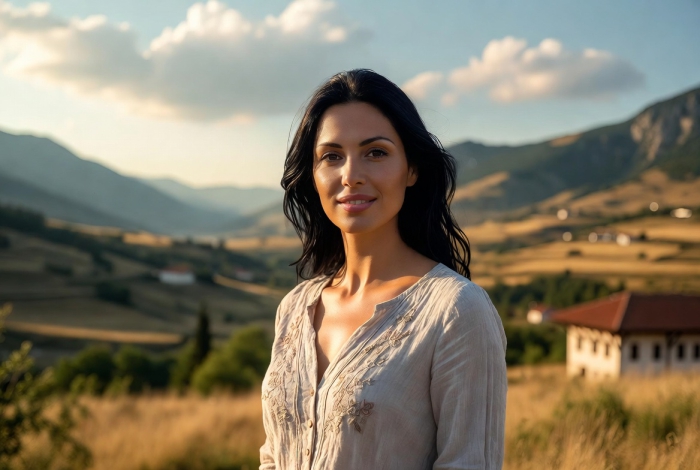 Bosnian women
Agence CQMI
Bosnian women
Agence CQMI
Bosnian Women: 9 Misconceptions Debunked — What You Really Don't Know
In Brief
A Bosnian woman is not a Turkish woman in Slavic clothes, not a Ukrainian woman with a different accent, and certainly not the war-trauma stereotype that Western media has projected onto the Balkans for thirty years. She is the heir to a civilization that is genuinely unique in Europe: five centuries of Ottoman Empire, four decades of Yugoslav communism, and a war of independence whose brutality was documented by the International Criminal Tribunal — and from which she emerged with a depth, resilience and warmth that are difficult to find elsewhere. Family first, always. Commitment for life, not for the season. If you are serious, read on.
By Antoine Monnier, Director and Founder of CQMI International Matchmaking Agency, specialist in serious relationships between Western men and women from Eastern Europe and the Balkans since 2014.
Let me start with a confession.
After more than a decade helping Canadian, British, American and Australian men build serious relationships with women from Eastern Europe, I still encounter the same blank look whenever I mention Bosnian women. Not hostility — just absence. Bosnia-Herzegovina registers, in the Western imagination, as a war from the 1990s. Sometimes as Zlatan Ibrahimović. Rarely as a woman worth knowing.
That is a loss — for the men who write it off before learning anything, and for the women who deserve to be understood rather than filtered through a lens of geopolitical tragedy.
I remember the first time I spent time in Sarajevo. The city is architecturally impossible and emotionally overwhelming — Ottoman mosques standing two streets from Austro-Hungarian coffee houses, Catholic cathedrals and Orthodox churches within walking distance of each other, all of it pressed between hills that still carry war cemeteries from 1992 to 1995. There is no other city like it in Europe. And the women who grew up in that city — trilingual in culture, tri-confessional in heritage, forged by an experience no Western woman has had — carry that complexity with a lightness that stops you cold.
Robert, a client from Edinburgh in his early 50s, an engineer, contacted me after crossing paths with a Bosnian woman on a work trip to Vienna. "Antoine," he said, "I don't know how to describe it. She was direct — almost bluntly so — but warm at the same time. She talked about her country like it was the most interesting place on earth, and honestly, by the time she was done, I believed her. She talked about her family as if they were sacred. I haven't met someone like that in years." Robert had stumbled onto something real without knowing how to name it.
In this article, I'll dismantle nine misconceptions that I hear regularly from men who are curious about Bosnian women — and that hold them back from something worth pursuing. I'll use verified data, direct field observations from twelve years at CQMI, and the kind of honesty that only comes from watching hundreds of real couples succeed and fail.
One thing before we start, and I mean this seriously: a Bosnian woman who engages in a genuine matchmaking process is looking for a life partner, not a visa, not a story to tell her friends, not a short-term arrangement. She has likely lived through more complexity in thirty years than most Western men accumulate in a lifetime. She does not have patience for men who are not certain of what they want. If that is not you, this article — and this process — is not for you.
If it is — keep reading.
Misconception #1 — "A Bosnian woman is essentially a Muslim woman"
The religious reductionism trap
This is the most common misconception, and the most paralyzing. The moment Bosnia is mentioned, the conversation defaults to Islam. For many Western men — especially in a cultural climate where religion carries intense political meaning — this generates either exoticizing fascination or defensive discomfort. Either way, the actual woman disappears behind a label.
What the demographic and cultural reality shows
Bosnia-Herzegovina is one of the most multi-confessional countries in Europe. According to the 2013 national census — the most recent, published by the Agency for Statistics of Bosnia and Herzegovina — 50.7% of the population identifies as Muslim (the Bosniak ethnic community), 30.7% as Orthodox Christian (Bosnian Serbs), and 15.2% as Roman Catholic (Bosnian Croats). This diversity is not a statistical abstraction: it structures urban geography, culinary traditions, family calendars and social psychology throughout the country.
More importantly, understand what Bosnian Islam actually is in lived practice. A 2015 Pew Research Centre survey found that only 31% of Bosnian Muslim women reported attending religious services on a weekly basis. A 2009 Gallup poll recorded 77% of Bosnian residents describing religion as "important in daily life" — but that importance is more often identity-based than prescriptive. Bosnian Islam, shaped by five centuries of Ottoman rule softened by forty years of Yugoslav secularism, is in its great majority a moderate Hanafi Islam deeply rooted in local tradition — far removed from the Wahhabi rigidity that some men fear, groundlessly, when they hear the word "Muslim."
What I observe in the profiles of Bosnian women we work with at CQMI: a minority wear the hijab. The majority practise their faith privately and discreetly, without it structuring the rules of daily relational life in the way some imagine. A Bosnian woman can share a glass of wine on a terrace, share a meal without dietary restrictions, and build a relationship with a non-Muslim man — without experiencing any internal contradiction she sees as a problem.
Verdict: INACCURATE as a dominant characterization. Bosnia is tri-confessional. Bosnian Islam is moderate and largely non-prescriptive in personal life. Reducing a Bosnian woman to her religious label means missing 95% of who she actually is.
Misconception #2 — "Bosnian women are still traumatized by the war"
The victim psychology assumption
The Bosnian War (1992–1995) is one of the most thoroughly documented humanitarian catastrophes in modern European history. Sarajevo endured the longest siege of a capital city in the history of modern warfare. Srebrenica was the site of the first genocide recognized on European soil since 1945. For some Western men, this history settles invisibly onto their image of Bosnian women: fragile, damaged, emotionally inaccessible.
What thirty years of reconstruction actually show
This reading is understandable — and fundamentally inaccurate as a framework for the women you will meet today. The generation of Bosnian women aged 28 to 45 — the core of serious matchmaking profiles — was born during the war or lived through it as very young children. What they inherited from that period is not a debilitating trauma but a psychological depth and resilience that most Western women have never had occasion to develop.
What strikes men in their first real exchanges with Bosnian women through CQMI is their capacity to speak about their history — including the most painful chapters — with clarity and a composure that can be disarming. Not resignation. A kind of earned serenity, built through genuine adversity. That composure, in a long-term partner, is an extraordinary relational asset.
Bosnia-Herzegovina in 2026 is a country in official EU candidacy — an Association Agreement has been in place since 2008, and in March 2024, EU leaders formally opened accession negotiations. Sarajevo is a dynamic, creative, internationally oriented city. The women graduating from the universities of Sarajevo, Mostar, Tuzla and Banja Luka are building European futures, not living in a memorial.
Verdict: INACCURATE. A Bosnian woman has integrated her history without being imprisoned by it. What she extracted from it is a maturity and depth you will not easily find elsewhere.
Misconception #3 — "A Bosnian woman just wants to leave her country"
The economic escape theory
Bosnia-Herzegovina ranks among the poorest countries in Europe — its GDP per capita stood at approximately €8,467 in 2024 according to the European Commission. Its unemployment rate remains one of the highest in the Balkans. And its emigration flows are spectacular: according to UNDESA, 1.6 million Bosnians were living abroad in 2024, with 95.8% residing in Europe — primarily in Croatia, Germany, Serbia, Austria and Slovenia. The supposed conclusion: any Bosnian woman interested in a Western man is primarily looking for a passport.
What the reality of real profiles contradicts
This reasoning contains a fundamental logical flaw. A Bosnian woman who simply wanted to emigrate economically does not need a matchmaking agency — she can join the already-established Bosnian diaspora in Germany, Austria or Slovenia through perfectly legal and accessible professional channels. Since 2010, Bosnian citizens have been able to travel throughout the Schengen Area without a visa. Bilateral labour agreements with Germany and Slovenia offer direct economic immigration pathways. If the objective were departure at any cost, the route is well-mapped without involving a romantic relationship.
What a Bosnian woman engaged in a serious matchmaking process is looking for is what every woman looks for in a relationship: a stable, emotionally mature man capable of lasting commitment — someone to build something real with. The difference is that in a country where the World Bank estimates roughly 44.5% of native-born citizens now live abroad, the local marriage market offers very limited options for an educated, discerning woman.
Before you venture onto unverified platforms in the name of saving money, read our full analysis of Pay Per Letter (PPL) dating scams — that is where budgets actually disappear, not in an honest relationship with a woman who knows her own worth.
Verdict: INACCURATE as a dominant motivation. She is choosing a man — not fleeing a country. The distinction is considerable.
Misconception #4 — "Bosnian women are not well-educated"
The developing-country prejudice
Bosnia-Herzegovina is often associated, in the Western imagination, with the image of a country in post-war reconstruction — economically fragile, institutionally complex. For some men, this implies a low level of education, limited intellectual horizons, and difficulty communicating in an international language.
What the data actually shows
The reality is more nuanced. According to UNESCO data compiled by Worlddata.info (2024), the adult literacy rate in Bosnia-Herzegovina is 98.3% — significantly above the global average of 86.6%. The country operates seven major public universities: Sarajevo, Banja Luka, Tuzla, Mostar (two distinct institutions across the entities), Zenica and Bihać, along with numerous private institutions. Higher education is accessible and socially valued — particularly for women. According to Eurostat surveys on Western Balkan countries, the share of women among university graduates in Bosnia-Herzegovina has exceeded that of men for more than a decade in several disciplines — law, medicine, social sciences and education leading the way.
Linguistically, the situation is more varied than in Croatia or Slovenia, but educated women from the major cities — Sarajevo, Mostar, Tuzla — typically speak English at a functional level, often German (a language with very strong presence in the Bosnian diaspora community), and sometimes Turkish. This is not an insurmountable barrier — it is a foundation for genuine connection.
Verdict: INACCURATE. An educated Bosnian woman is intellectually grounded, often multilingual, and possessed of a cultural curiosity shaped by living at the intersection of several civilizations simultaneously.
Misconception #5 — "Bosnian women's family values don't compare to Ukrainian women's"
The supposed hierarchy of Slavic family cultures
Among men who already have some experience with Eastern European women, there is a tendency to implicitly rank nationalities by "family values." Ukraine, Russia or Belarus are sometimes used as the benchmark. The Balkans — and Bosnia in particular — are treated as less certain ground.
What Bosnian family life actually demonstrates
This is a categorical error. Family is the absolute centre of Bosnian social life — and this holds across all three confessional communities. The Bosnian tradition of komšiluk — literally "neighbourhood," a term encompassing the whole network of solidarity, mutual support and community bonds — structures social relations at a depth that most Western societies have largely abandoned. Family celebrations — Eid for Muslim families, Orthodox Christmas and Easter for Serb families, Catholic Christmas for Croat families — are intense collective events where three or four generations come together around tables that last for hours.
Bosnian food itself is a marker of that attachment. Ćevapi (grilled minced meat) prepared at home for a special occasion, burek (a flaky pastry filled with meat or cheese) made in the morning for the family, bosanski lonac (a slow-cooked Bosnian pot roast that simmers for hours) served for major gatherings — these are not recipes, they are gestures of belonging. A Bosnian woman who cooks these dishes for you is telling you something about the weight she gives you in her life.
What I observe consistently in the lasting couples formed through our agency: men who chose a Bosnian woman describe the depth of that family bond as one of their most valued discoveries — frequently contrasted with the emotional isolation that characterized their previous lives.
Verdict: INACCURATE. Bosnian family values are deep and multi-layered — expressed across three confessional traditions, all converging on the same essential point: family is what gives life meaning.
Misconception #6 — "Bosnian women are less feminine than Ukrainian women"
The canonical Slavic beauty stereotype
In some men's minds, Ukrainian or Russian women represent a canonical form of Slavic femininity — tall, fair, meticulously presented. A Bosnian woman, perceived as Balkan or vaguely Oriental, seems to occupy a different and somehow lesser category.
What direct observation reveals
Bosnian beauty is a genetic and cultural synthesis that Europe has produced only once. Five centuries of Ottoman rule contributed a complexion that is often more Mediterranean, features that are both fine and intensely expressive, a dark and searching gaze that women from Bosnia share with their counterparts from Herzegovina and Dalmatia — without being the same thing. Height is generally pronounced: Bosnia-Herzegovina consistently ranks among the countries with the tallest populations in Europe, and women are no exception to that trend.
What strikes men in their first video contact with a Bosnian profile through CQMI is a directness of presence and an absence of performance. A Bosnian woman does not put on a show. She is simply there — sincere, warm, looking at you rather than through a lens. She takes care of herself with seriousness but without ostentation. Sober elegance rather than exhibition.
There is also a cultural dimension that enriches the dynamic considerably: a woman who has grown up at the intersection of Ottoman Islam, Austro-Hungarian Catholicism and Serbian Orthodoxy develops an intercultural adaptability and intellectual flexibility that makes cross-cultural relationships with Canadian, British, American or Australian men genuinely richer — not more complicated.
Verdict: INACCURATE. Bosnian femininity is real and intense — it combines Slavic depth with the warmth and expressiveness inherited from an Ottoman and Mediterranean heritage. It reveals itself in the relationship, not in profile photographs.
Misconception #7 — "Communication with a Bosnian woman will be very difficult"
The assumed language barrier
Bosnian is a South Slavic language — to an English speaker, it looks and sounds as impenetrable as Ukrainian or Russian. Some men anticipate months of communication through translators, laborious exchanges in broken English, the awkward silences that come from genuine linguistic distance.
What field experience actually demonstrates
The reality is more favourable than it appears. The Bosnian diaspora community is massive and predominantly established in Germany, Austria and Switzerland — which makes German a very widely spoken language among educated Bosnian women with family abroad. According to UNDESA (2024), the Bosnian community in Germany alone represents nearly 20% of the total diaspora. English is taught from primary school onward and is spoken at a functional level by the majority of university-educated women in the cities.
But beyond technical language competence, there is a more important dimension: the way a Bosnian woman communicates. She is direct. She says what she thinks, she expresses what she feels, without excessive circumlocution. That directness — which men often discover with a certain relief after years of navigating the coded indirectness of Western relationships — is a defining characteristic. In my experience, the couples where communication works best are those where the man learned to appreciate that clarity rather than reading it as bluntness.
And if you want to make a gesture that will genuinely land: learn a few words of Bosnian. Dobro jutro (good morning), hvala (thank you), molim (please). Not a requirement — a signal of respect that carries more weight than you might expect.
Verdict: OVERSTATED. The language barrier is manageable. The direct and frank communication style of Bosnian women is an asset — not an obstacle to navigate.
Misconception #8 — "Bosnian women are conservative and won't adapt to life in Canada or the UK"
The cultural enclosure assumption
The image of Bosnia as a country locked in post-war ethnic tensions and conservative traditions leads some men to assume that a Bosnian woman would struggle to integrate into an open, secular Western society — that she would arrive with too many incompatible expectations, too much baggage, too little flexibility.
What the reality demonstrates
This is probably the least-grounded misconception on this list. Bosnia-Herzegovina has produced one of the proportionally largest diasporas in Europe: the World Bank estimated that approximately 34% of native-born Bosnians were living abroad as of 2020 — placing the country second globally in that ratio, after Syria. In concrete terms: international adaptation is a skill that Bosnian families have developed across multiple generations. It is rare to meet a Bosnian woman who does not have a cousin in Vienna, a sister in Munich, an uncle in Toronto or an aunt in Paris.
That multi-generational diaspora experience produces an adaptability that I find consistently in the lasting couples we have accompanied. A Bosnian woman who relocates to Canada, the UK or Australia does not arrive into the unknown — she arrives with a mental map of the Western world built since childhood, often reinforced by direct experience visiting diaspora family. She integrates, finds employment, learns the local language, and maintains her family ties with an organizational discipline that Bosnian families have refined into something close to an art form.
And for men considering a relationship with a Bosnian woman — at CQMI, we have been accompanying this type of project since our founding in 2014, with a detailed knowledge of the cultural and administrative specificities involved.
Verdict: INACCURATE. International mobility is in the DNA of Bosnian families after thirty years of diaspora. A Bosnian woman who commits to a relationship with a Western man arrives with a proven capacity to adapt.
Misconception #9 — "A Bosnian woman cannot be in a relationship with a non-Muslim man"
The supposed inter-confessional barrier
For men with limited exposure to the Balkan Muslim world, the assumption that religion would formally prohibit a relationship with a non-Muslim man is a recurring concern. They picture closed families, insurmountable community pressure, fundamental incompatibility.
What history and contemporary reality actually show
Bosnia-Herzegovina has a history of inter-religious coexistence going back centuries — and one that survived, despite everything, the brutality of the 1990s. Sarajevo was historically nicknamed the "Jerusalem of Europe" precisely because mosques, synagogues, Catholic cathedrals and Orthodox churches stood within a few hundred metres of each other. That tradition of inter-religious neighbourliness — the komšiluk — was violently tested by the war, but it did not disappear.
In contemporary practice, Bosnian women from moderately observant families — which represents the majority of profiles we work with — navigate their romantic lives without religion functioning as an absolute veto. What matters is respect. A Bosnian woman with a genuine cultural and religious identity expects her partner to respect it — not necessarily to share it. That is a fundamental distinction.
In our experience, the cultural and religious difference can be a source of genuine mutual enrichment in these couples. Benevolent curiosity — taking an interest in Eid, understanding why Bosnian coffee is a hospitality ritual, knowing what the iftar means — is the first signal of respect that a Bosnian woman will register and value.
To develop a sharper sense of how different Eastern European and Balkan cultures compare, our reference article on age difference in international relationships will give you a useful calibration framework for your specific situation.
Verdict: INACCURATE in its absolutist formulation. A Bosnian woman engaged in a serious process with a Western man does not make religion a deal-breaker — but mutual respect is non-negotiable. Those are not the same thing.
Bosnian, Ukrainian, Russian: the real differences
Twelve years of direct observation at CQMI make this comparison possible:
| Criterion | Bosnian | Ukrainian | Russian |
|---|---|---|---|
| Cultural family | South Slav, tri-confessional (Muslim/Orthodox/Catholic), Ottoman and Habsburg heritage | East Slav, Orthodox, European cultural orientation | East Slav, Orthodox, Eurasian cultural orientation |
| Communication style | Direct, warm, sincere — no performative politeness | Expressive, direct, sometimes reserved on first contact | Warm once trust is established |
| Language bridge | English + often German (diaspora) — moderate barrier | Ukrainian/Russian, variable English | Russian, variable English |
| Visa status | Schengen visa-free travel since 2010 | Schengen visa-free since 2017 | Visa required (restrictions since 2022) |
| Femininity | Balkan-Slavic — direct, natural, intense presence | Assertive, elegant, sometimes more formal | Poised, reserved, deep |
| Family values | Central and absolute — komšiluk as a way of life | Central, clearly expressed | Strong, varying by individual |
| Religion | Tri-confessional — moderate Islam majority, Orthodox, Catholic | Orthodox — identity strongly affirmed since 2014 | Orthodox — strong cultural foundation |
| EU candidacy | Official EU candidate — accession negotiations opened March 2024 | Official EU candidate since June 2022 | Outside EU accession process |
The 5 mistakes men consistently make with Bosnian women
- Reducing her to her religion. A Bosnian woman is far more than her confessional identity. Her identity is triple, historical, geographic. Starting the relationship with religion as your primary filter means missing nearly everything of substance.
- Mistaking warmth for availability. Bosnian women are warm and welcoming by nature — it is the komšiluk tradition. It is not an implicit romantic signal. She is sincere and direct: if she is interested, she will tell you clearly.
- Underestimating the family dimension. In Bosnia, your relationship with a woman implies a relationship with her family — extended, present, affectionate and attentive. A man who sees that as a burden is not ready for this kind of relationship. A man who recognizes it as richness will be welcomed accordingly.
- Not being clear about your intentions from the start. A Bosnian woman engaged in a serious process does not waste time with ambivalent men. State what you are looking for. She will respond with the same directness.
- Using unverified platforms. The risk of fraud on uncontrolled sites is real, regardless of which country's women you are hoping to meet. Before any approach, verify the agency, its selection process, its references. And if you are wondering whether you are ready for this path, our compatibility quiz can help you assess your profile honestly.
Two stories from the field
The coffee that lasted two hours — and what it means
James, a client from Toronto in his late forties, a project manager, told me about his first meeting in Sarajevo with a member of ours — an economist in her mid-thirties. They had planned a one-hour coffee. Two hours later, they were still there. She was walking him through the history of the city, the neighbourhoods, the story of how her grandmother had hidden Serb neighbours during the war. James called me that evening: "Antoine, I left that café having learned more about European history in two hours than in all my years of school combined. And she asked about me with a sincerity I hadn't encountered in a long time." That coffee lasted two hours. Their relationship has been going for three years.
The question he wasn't expecting
Robert, our client from Edinburgh, was on a first video call with a member from Mostar. Twenty minutes in, after a warm exchange about their respective interests, she asked him directly, without preamble: "So — where do you want to be in ten years?" Robert told me he was caught completely off guard. "I expected her to ask about my travels, my work situation. She went straight to the point." He took it like an affectionate slap. And he understood immediately that this woman had no intention of wasting his time or hers. That was the right signal.
Frequently asked questions about Bosnian women
Can a Bosnian woman marry a non-Muslim man?
In contemporary practice, yes — and this applies to many of the couples we accompany. Bosnian Islam is moderate and largely non-prescriptive in personal life. What is expected is mutual respect for each other's beliefs and traditions — not a conversion or formal religious adherence.
Are visa and immigration procedures complicated with a Bosnian woman?
Bosnian citizens have travelled visa-free within the Schengen Area since 2010. Bosnia-Herzegovina is an EU candidate country with accession negotiations formally opened in March 2024. Procedures for longer stays or settlement in Canada, the UK or Australia need to be managed, but they are well-documented and do not present the complexities encountered with Russian nationals since 2022.
What age gap is reasonable with a Bosnian woman?
From our experience, a gap of 2 to 12 years represents the optimal zone for lasting relationships. Beyond 15 years, the generational, cultural and family dynamics become significantly more challenging to navigate. Our reference article on how to avoid common pitfalls in international dating gives you a clear framework for assessing your situation.
Do I need to speak Bosnian to meet a woman from Bosnia-Herzegovina?
No — English and often German allow direct communication with most educated women from the cities. A few words of Bosnian (hvala = thank you, dobro jutro = good morning) are a gesture of respect that is genuinely appreciated, without being a requirement.
How do I seriously meet a Bosnian woman from Canada, the UK or Australia?
Through CQMI — our $350 CAD/month subscription gives you access to 10 verified contacts with women who are genuinely motivated to build a lasting relationship. Our Bosnian members have all been met in person, verified on identity and intentions. Profiles are accessible on our member search page.
What you really need to understand about Bosnian women
A Bosnian woman is not a category. She is the daughter of a country that survived five centuries of Ottoman Empire, forty years of Yugoslav communism and a war whose brutality was documented by the International Criminal Tribunal — and that rebuilt itself on those ruins with its eyes fixed on Europe.
What CQMI International Matchmaking Agency's experience — more than 350 successful marriages since 2014 — confirms about Bosnian women:
- Her tri-confessional identity is not a complication — it is a cultural depth that few European women have developed.
- Her post-war resilience is not a trauma to manage — it is a psychological maturity you will recognize in the first serious conversation.
- Her natural warmth is not naivety — she knows precisely what she is looking for, and she will tell you.
- Her family attachment is not a burden — it is a promise of permanence in a world that runs short of it.
- Her international mobility is a proven skill — she does not arrive into the unknown; she arrives with a mental map of the Western world built since childhood.
If you are a serious man looking for a real shared life, a Bosnian woman deserves your full attention.
Ready to meet a serious Bosnian woman?
CQMI has been operating since 2014. Our subscription — $350 CAD/month — gives you access to 10 verified contacts with women who are genuinely motivated to build a lasting relationship. More than 40% of female applications are rejected during our selection process.
This is not a dating website. It is a matchmaking agency with a strict ethical charter.
350+ successful marriages Divorce rate < 7% No chatbots, no ghost translators
Discover our process →Questions? Write directly to Antoine: This email address is being protected from spambots. You need JavaScript enabled to view it.
Related articles on the CQMI blog
Latest from Antoine Monnier
- How to Verify a Russian or Ukrainian Woman's Photo Online
- Why There Is a Real Shortage of Men in Ukraine and Russia Since the War
- Orthodox Ukrainian Woman or Muslim Kazakh/Uzbek Woman: What's the Real Difference for Marriage?
- Dating a Russian or Ukrainian Woman: Why Your Playbook Won't Work
- Why a Russian or Ukrainian Woman Sees You as Just Another Man

 +1 514 794-5053